Aluminum in crisis: War, tariffs and a market running on empty
17/04/2026
17/04/2026

Want to give your company a better online profile and highlight your best assets? Fill out the form below and we’ll build a report for your company to include on Breakaway Research.
· Even if the war were to end tomorrow, it could take up to a year for Emirates Global Aluminium to recover from the damage inflicted by a missile strike on its Al Taweelah smelter last month.
· Aluminium Bahrain, the largest single-site production plant outside of China, has also been hit, although the extent of the damage is currently unknown. Alba had already reduced output prior to the attack, as had Qatar Aluminium, due to a shortage of power.
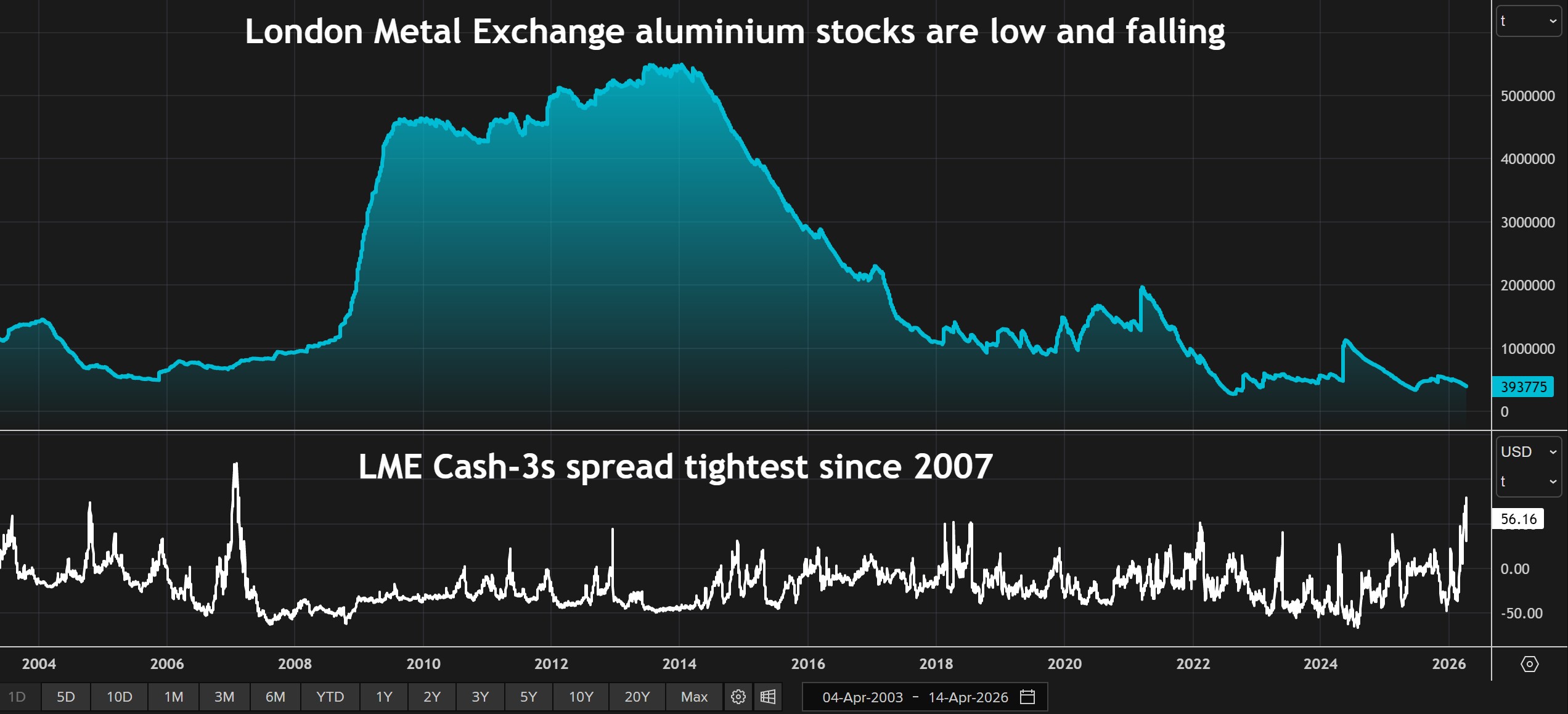
· With shipping through the Strait of Hormuz severely constrained, the loss of production could rise further as smelters run through their stocks of raw materials. The global market is looking at a supply deficit of up to 4 million metric tons this year, according to consultancy Wood Mackenzie.
· Incongruously, there is significant idled smelter capacity, particularly in the US and Europe, which could in theory be reactivated to help alleviate the squeeze on physical metal supplies. However, most of this capacity was taken offline during previous energy crises, as an enormous amount of energy is required to make aluminium – aluminium is often referred to as “solid electricity."
· Given the impact of the Iran war on energy prices, it seems highly unlikely much, if any, of the mothballed capacity will return. Indeed, the global shortage of affordable power was already forcing more closures even before the start of hostilities in the Gulf.